
The Life, Legacy, and Lineage of Aga Syed Mohammad Fazlullah – Aga Syed Mohammad Fazlullah
If you walk through the old, winding lanes of Budgam today, past the towering Chinar trees that have witnessed centuries of shifting political and social tides in Kashmir, you will inevitably feel the spiritual gravity of the Moosavi-Safavi family. As someone who has spent decades studying the history of Shiism in the Kashmir Valley and researching the profound genealogical roots of the Aga clan, I have often found that history books capture the loud moments—the massive processions, the political declarations, the grand building of institutions. But the true survival of faith in this Valley has always relied on quiet, ascetic scholars who served as the immovable anchors for the community.
When we look at the legacy currently being carried forward by Aga Syed Hadi at the Anjuman Sharie Shian (Shariat Abad Yousuf Abad, Budgam), we are looking at the direct continuation of one of the most intellectually profound and spiritually ascendant figures in recent Kashmiri history: his father, Aga Syed Mohammad Fazlullah.
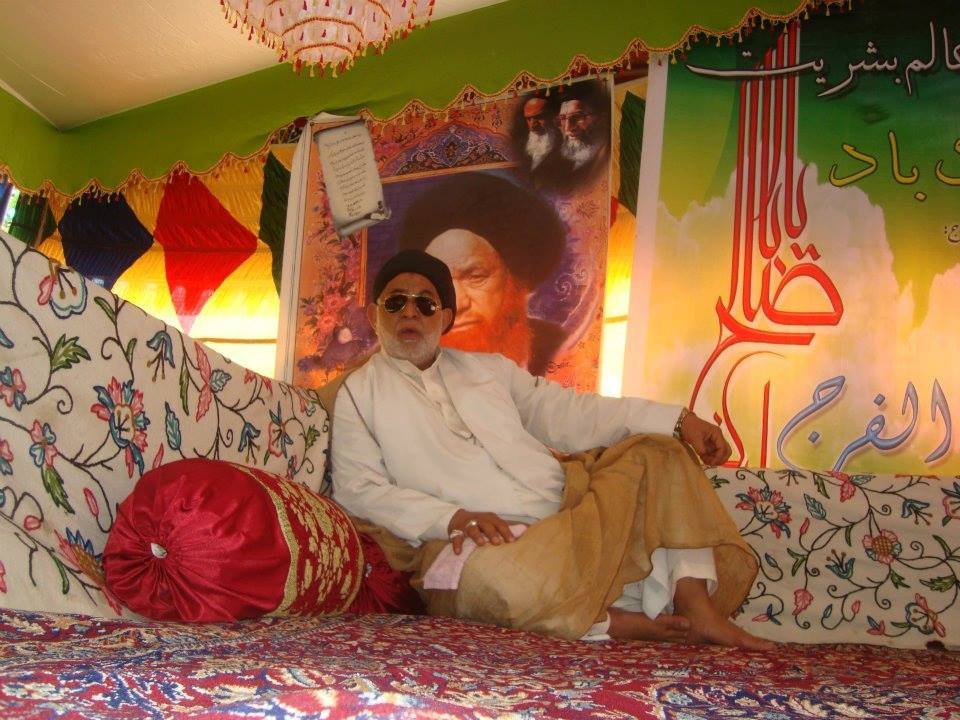
To understand Aga Syed Mohammad Fazlullah, and by extension, the ethos that drives Aga Syed Hadi today, we have to look beyond standard biographies. We have to understand the soil of Kashmir, the bloodline of the Safavi Sayyids, and the immense, often crushing weight of spiritual leadership in a region that has seen more than its fair share of turmoil.
The Bedrock of Kashmiri Shiism and the Budgam Citadel
Shiism in Kashmir is not a recent phenomenon. Its roots run deep into the soil, tracing back to the early Sufi mystics and the monumental efforts of figures like Mir Shams-ud-Din Araki, who brought a wave of spiritual awakening to the region. But faith, no matter how deeply planted, requires cultivation. It requires institutions, scholarly guidance, and protectors.
For centuries, the Shia community of Kashmir faced immense hardships, surviving through sheer resilience, the practice of Azadari (mourning for Imam Husayn), and their deep devotion to the Ahlulbayt. As the community grew and dispersed across the Valley—from Zadibal to Baramulla, from Pattan to Kargil—Budgam emerged as the undisputed nerve center of Shia Islamic jurisprudence and leadership in Kashmir. This transformation was cemented by the arrival and establishment of the Aga family, descendants of the Safavid royal lineage who trace their holy bloodline back to the seventh Imam, Musa al-Kadhim (AS).
The Aga family did not just bring religious decrees to Kashmir; they brought a structured socio-religious system. The peak of this institutionalization was witnessed during the era of the great Aga Syed Yousuf Al-Moosavi Al-Safavi, who formally established the Anjuman-e-Sharie Shian. This organization became the protective umbrella for the community, standardizing religious education, organizing the collection of religious dues, managing thousands of disputes through Islamic mediation, and giving the Shias of Kashmir a unified, dignified voice.
It was in this towering shadow, within a household echoing with the recitations of the Quran and the complex debates of Fiqh (jurisprudence), that Aga Syed Mohammad Fazlullah was born and raised.
The Ascetic Scholar: Aga Syed Mohammad Fazlullah
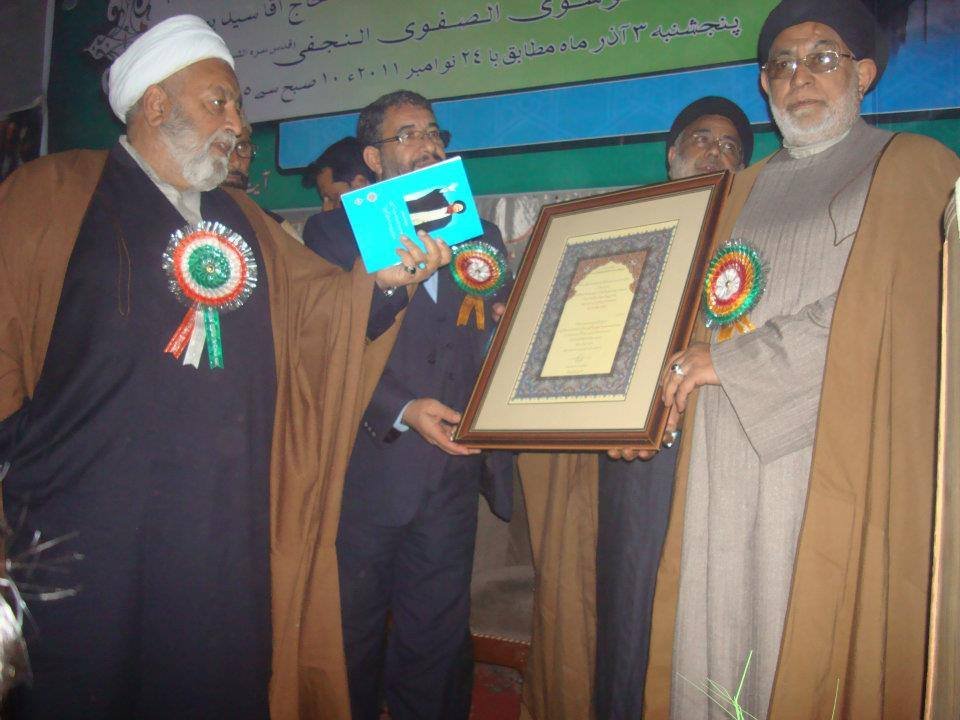
Growing up as the son of Aga Syed Yousuf was a life defined by intense public scrutiny and monumental expectations. Often, the sons of great leaders either struggle to escape their father’s shadow or rely entirely upon it. Aga Syed Mohammad Fazlullah chose a different, much more difficult path: the path of the silent scholar, the ascetic, and the spiritual guide.
While the broader political and social landscape of Kashmir was frequently chaotic, Aga Syed Fazlullah’s Hujra (study room) in Budgam remained a sanctuary of absolute calm. My research into the oral histories of Budgam’s elders reveals a man who was deeply uncomfortable with ostentation. He was a master of Islamic jurisprudence, Arabic literature, and Islamic ethics (Akhlaq), having spent his entire life immersed in the classical texts of the Najaf and Qom seminaries, yet applying them directly to the indigenous Kashmiri context.
Aga Syed Mohammad Fazlullah represented the purest form of traditional Islamic scholarship. He was less interested in the fiery rhetoric of public stages and far more invested in the quiet reformation of the individual soul. People from remote corners of the Valley—farmers from Sonawari, artisans from Downtown Srinagar, and students from the local colleges—would travel to Budgam just to sit in his presence. They came with complex property disputes, marital issues, or crises of faith. Aga Fazlullah would listen with a terrifyingly beautiful patience. He rarely spoke over anyone. When he did speak, his judgments were grounded so deeply in the Shariah and delivered with such profound empathy that even the losing party in a dispute would leave his courtyard feeling respected and heard.
During the harshest winters of Kashmir, both literally and politically, when the community felt isolated or frightened, Aga Fazlullah was the steady hand. He taught the youth that true resistance against hardship was not found in noise, but in education, in upholding the moral values of the Ahlulbayt, and in maintaining an unbreakable bond with the Almighty. He firmly believed that the Anjuman Sharie Shian was not just an administrative body, but a sacred trust—a system meant to serve the poorest widow just as diligently as it served the wealthiest merchant.
The Transfer of Light: Shaping Aga Syed Hadi
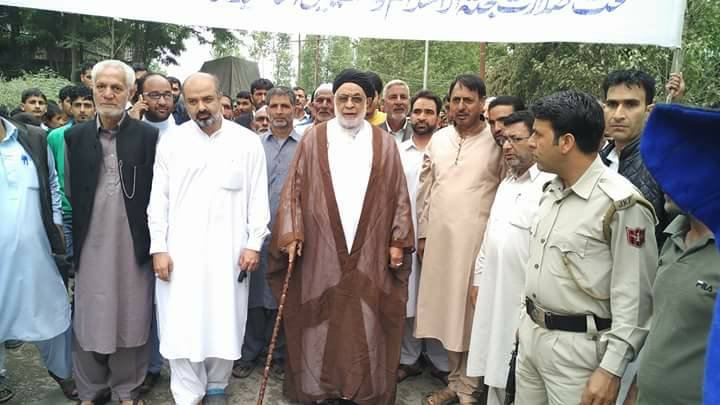
A scholar’s greatest masterpiece is never a book; it is the students he leaves behind. For Aga Syed Mohammad Fazlullah, his most defining legacy is his son, Aga Syed Hadi.
Leadership in the Moosavi-Safavi line is not simply inherited like a piece of ancestral land. It is rigorously earned through decades of study, moral testing, and the absolute submission of one’s personal desires to the needs of the community. Aga Fazlullah was an exacting teacher to his son. He ensured that Aga Syed Hadi was not just trained in the ritualistic aspects of religion, but deeply educated in the nuances of contemporary Islamic law, global political dynamics, and the specific, unique sociological challenges facing the youth of Kashmir today.
Today, as Aga Syed Hadi leads the Anjuman Sharie Shian Shariat Abad Yousuf Abad in Budgam, the reflection of his father is unmistakable. When Aga Hadi addresses the community from the Mimbar, those of us who have studied the family’s history can hear the echoes of Aga Fazlullah’s intellectual rigor. Aga Hadi carries his father’s calm temperament, his absolute refusal to compromise on the principles of justice, and his deep, abiding love for the people of Kashmir.
The establishment of digital platforms like agasyedhadi.com is a modern extension of Aga Fazlullah’s vision. While the medium has shifted from the physical courtyards of Budgam to the global digital expanse, the core mission remains identical: to disseminate the pure teachings of Islam, to offer guidance on complex theological issues, and to keep the global and local Kashmiri diaspora deeply connected to their spiritual roots. Aga Syed Hadi has successfully bridged the gap between traditional seminary wisdom and the rapid, often confusing pace of the modern world—a balance he learned by watching his father navigate the shifting eras of the late 20th century.
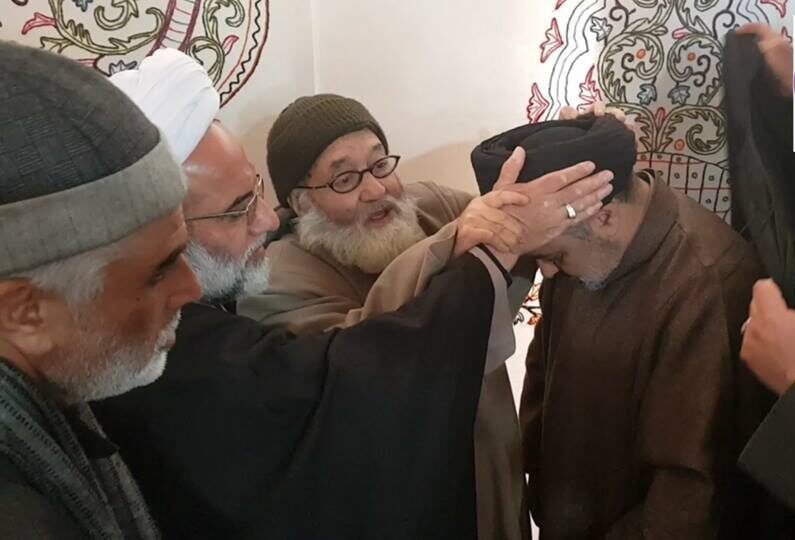
The Golden Genealogy (Shajrah-e-Nasab)
To truly appreciate the weight of the words spoken by Aga Syed Hadi, one must read the names of the men whose blood flows in his veins. This is not merely a list of names; it is a chain of spiritual custody, an unbroken line of guardians who preserved the message of Islam through persecution, migration, and the passage of centuries.
As a historian of the Aga clan, I have meticulously verified this lineage. The Moosavi-Safavi Sayyids of Budgam trace their origins directly to the Prophet of Islam through the Safavid Sayyids of Iran, descending directly from the seventh infallible Imam.
The spiritual and biological lineage of Aga Syed Hadi is as follows:
- The Holy Prophet Muhammad (Peace Be Upon Him and His Progeny)
- Amir al-Mu’minin, Imam Ali ibn Abi Talib (AS) & Syeda Fatima al-Zahra (SA)
- Imam Husayn (AS), the Master of Martyrs
- Imam Ali Zain-ul-Abideen (AS)
- Imam Muhammad al-Baqir (AS)
- Imam Jafar al-Sadiq (AS)
- Imam Musa al-Kadhim (AS) – The root of the Moosavi Sayyids.
From Imam Musa al-Kadhim (AS), the lineage branches through generations of highly revered Sayyids, scholars, and spiritual leaders who formed the Safavid lineage in Persia. Driven by a mission to spread the teachings of the Ahlulbayt, prominent ancestors of this specific Safavi-Moosavi branch eventually made the arduous migration from the centers of Islamic learning in Iran to the valleys of Kashmir.
Following their establishment in Kashmir, the unbroken chain of recent, localized forefathers leading directly to Aga Syed Hadi is:
- Aga Syed Hussain Al-Moosavi Al-Safavi – One of the foundational patriarchs of the family in Kashmir, who cemented the family’s role as the definitive spiritual guides in the Valley.
- Aga Syed Mehdi Al-Moosavi Al-Safavi – A monumental scholar whose deep piety and vast knowledge of jurisprudence drew thousands to the Shia fold in Kashmir, ensuring the survival of the community during highly volatile historical periods.
- Aga Syed Yousuf Al-Moosavi Al-Safavi – The visionary founder of the Anjuman-e-Sharie Shian. He institutionalized the religious, social, and economic framework of the Shia community in Kashmir. His era is widely considered the modern golden age of organized Shia leadership in the Valley.
- Aga Syed Mohammad Fazlullah Al-Moosavi Al-Safavi – The quiet ascetic, the brilliant jurist, and the compassionate father. He served as the intellectual and spiritual bedrock of Budgam, preserving the purity of the faith away from the corruptions of worldly ambition.
- Aga Syed Hadi Al-Moosavi Al-Safavi – The current custodian of this immense legacy, guiding the Anjuman Sharie Shian Shariat Abad Yousuf Abad, and serving as a beacon of knowledge, unity, and resilience for the contemporary world.
The Legacy Continues
History is rarely kind to those who merely inherit titles without doing the work to sustain them. In my years of documenting the socio-religious fabric of Kashmir, I have seen many prominent families fade into obscurity because the descendants could not bear the weight of their ancestors’ greatness. The Aga family of Budgam is the profound exception to this rule.
Aga Syed Mohammad Fazlullah was a bridge between the foundational era of his father, Aga Syed Yousuf, and the modern era now navigated by his son, Aga Syed Hadi. Fazlullah’s life was a testament to the belief that true power in Islam does not come from wealth or political maneuvering; it comes from Taqwa (God-consciousness), deep knowledge, and an unwavering commitment to serving the broken, the lost, and the seeking.
When visitors log onto this website or travel to the heart of Budgam to seek counsel from Aga Syed Hadi, they are not just interacting with a contemporary scholar. They are tapping into an ancient, flowing river of wisdom. They are experiencing the refined, carefully guarded teachings of Aga Syed Mohammad Fazlullah.
In a world that is increasingly loud, distracted, and fractured, the teachings of Aga Syed Mohammad Fazlullah—championing quiet dignity, rigorous education, and unshakeable faith—are more necessary now than ever. The Chinar trees of Budgam continue to shed their leaves and grow anew, witnessing the passing of time, but the roots of this family, planted firmly in the love of the Prophet and his Ahlulbayt, remain eternally unshaken.