





The days of Ayyam-e-Fatimiyyah serve as a profound period of grief, reflection, and spiritual realignment for the global Muslim community. It is a time when the faithful pause to mourn the tragic and untimely martyrdom of the beloved daughter of the Holy Prophet Muhammad (PBUH), Hazrat Fatima Zahra (s.a.). However, beyond the tears and the elegies, these days represent an essential opportunity to revisit the unparalleled legacy of a woman who stood as the absolute embodiment of divine truth, justice, and unwavering resilience.
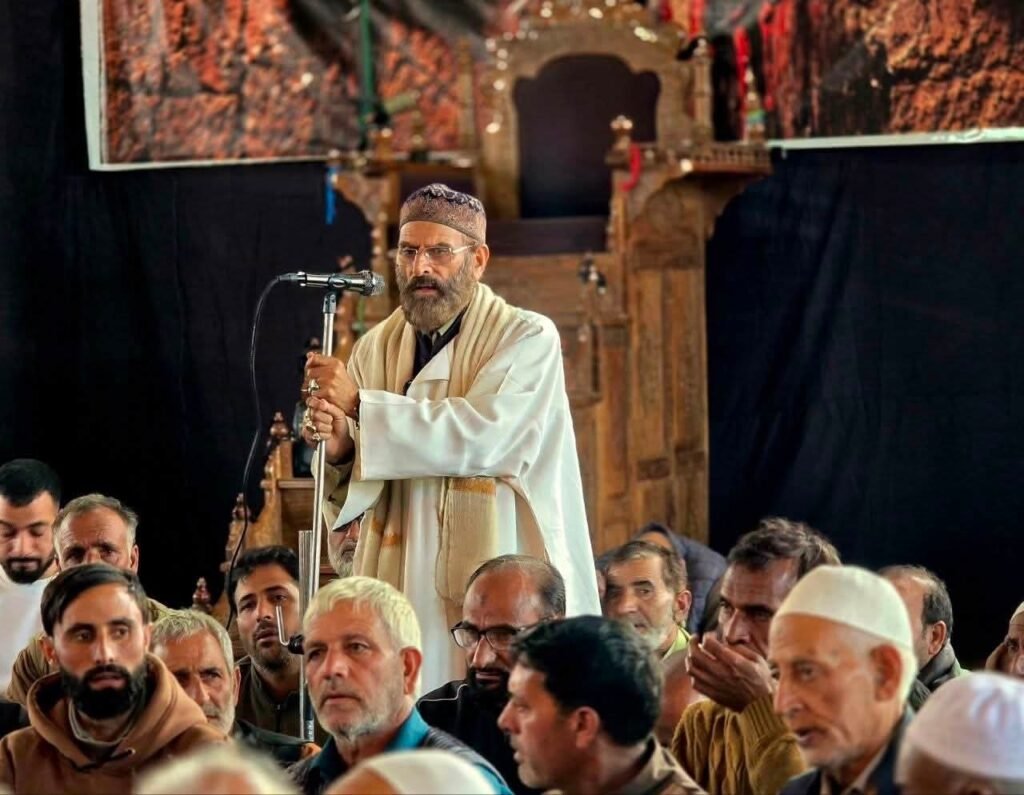
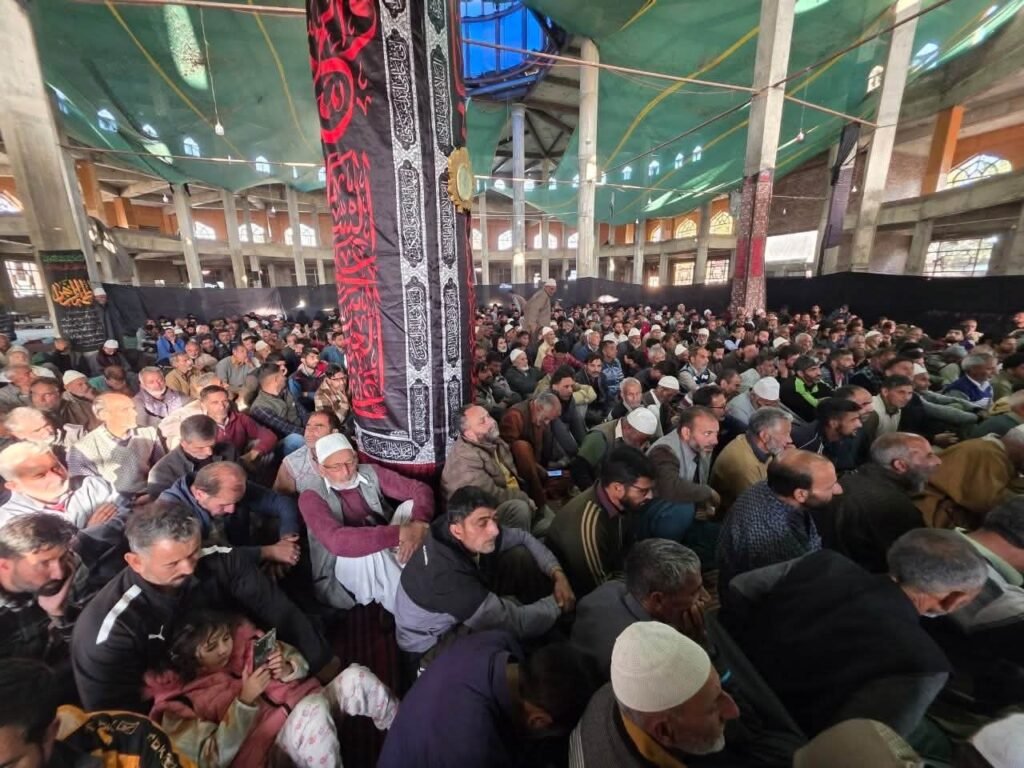
On October 27, 2026, thousands of devoted mourners gathered at the Imambargah Ayatullah Yusuf Shari Fazlullah in Bemina to commemorate the 3rd Majlis in the series of Ayyam-e-Fatimiyyah. The atmosphere was heavy with sorrow yet illuminated by the light of faith, as attendees came together to honor the Lady of Light. The keynote address was delivered by Hujjat-ul-Islam wal-Muslimin Aga Syed Mohammad Hadi Moosavi Kashmiri, whose sermon provided a deep, transformative exploration of the Seerah (life and character) of Janab-e-Sayyeda (s.a.) and its critical necessity in our modern world.
The Atmosphere of Devotion at Imambargah Ayatullah Yusuf
The Imambargah in Bemina has long stood as a central hub for spiritual awakening and community solidarity. On the day of the 3rd Majlis, the grounds were filled with men, women, and children, all united by their devotion to the Ahlulbayt (a.s.). The visual of thousands sitting in solemn reverence, dressed in mourning attire, underscored the deep-rooted love the people of Kashmir hold for the Prophet’s household.
The Majlis commenced with the recitation of the Holy Quran, followed by poignant Marsiyas and Nohas that brought tears to the eyes of the attendees, setting a deeply spiritual tone for the sermon that was to follow. When Aga Syed Mohammad Hadi took the pulpit, the profound silence of the vast audience reflected their eagerness to absorb the wisdom and historical truths surrounding the life of the Chief of the Women of the Worlds.
Understanding the Title of ‘Umm Abiha’
Aga Syed Hadi began his address by delving into the unique and exalted status of Hazrat Fatima (s.a.) in the eyes of the Almighty and His Messenger. He drew special attention to the title Umm Abiha, which translates to “the mother of her father.” This unparalleled title, bestowed upon her by the Holy Prophet (PBUH) himself, was not merely an expression of paternal affection; it was a profound testament to her protective, nurturing, and pivotal role in the early days of Islam.
Through historical anecdotes, Aga Syed Hadi illustrated how Hazrat Fatima (s.a.) comforted the Prophet (PBUH) during the most grueling periods of persecution in Mecca. When the enemies of Islam would inflict physical and emotional harm upon the Prophet, it was a young Fatima (s.a.) who would wipe the dust from his radiant face, tending to his wounds with a maturity and devotion that mirrored maternal care. The speaker emphasized that to understand Islam’s survival, one must understand the emotional and spiritual anchor that Janab-e-Sayyeda provided to the Seal of Prophets.
The Ultimate Defender of Wilayat
A central theme of the 3rd Majlis was Hazrat Fatima’s (s.a.) uncompromising stance on justice and her defense of Wilayat (divine authority) following the demise of her holy father. Aga Syed Hadi meticulously articulated that the Lady of Light was not a passive figure in Islamic history; rather, she was a dynamic, intellectual, and courageous leader who recognized the deviation occurring in the socio-political landscape of her time.
Her famous Sermon of Fadak (Khutba-e-Fadakia) was highlighted not merely as a legal dispute over property, but as a masterclass in theology, Quranic exegesis, and human rights. Aga Syed Hadi passionately reminded the congregation that Hazrat Fatima (s.a.) utilized her voice and her knowledge to challenge the usurpation of truth. Her physical and emotional sufferings in her final days were sacrifices made to awaken the conscience of the Ummah—a sacrifice that continues to inspire revolutionary movements against tyranny to this day.
The Fatimi Seerah: A Blueprint for the Modern Era
Transitioning from historical analysis to contemporary application, Aga Syed Hadi addressed the pressing social, cultural, and familial crises facing today’s society. He posed a vital question to the attendees: How can the life of a figure from fourteen centuries ago cure the spiritual and social ailments of the 21st century?
The answer, he explained, lies in the absolute perfection of her multi-dimensional roles. As a daughter, she exemplified perfect obedience, love, and support. As a wife to Imam Ali (a.s.), she established a household built on mutual respect, spiritual partnership, and intellectual harmony—a stark contrast to the transactional and fragile nature of many modern marriages. Aga Syed Hadi urged the youth, particularly young couples, to study the household of Ali (a.s.) and Fatima (s.a.) to understand how a home can become a sanctuary of peace and divine grace, even in the face of extreme poverty and external hardships.
Furthermore, as a mother to Imam Hasan (a.s.), Imam Hussain (a.s.), and Bibi Zainab (s.a.), she raised individuals who would become the saviors of humanity. Aga Syed Hadi pointed out that the unparalleled bravery witnessed on the plains of Karbala was a direct product of the training provided in the lap of Fatima Zahra (s.a.). He called upon parents to integrate the Fatimi model of parenting into their homes, focusing on the moral, ethical, and religious upbringing of their children to safeguard them against the moral decay of the modern world.
A Call for Unity, Resilience, and Spiritual Awakening
As the Majlis drew to a close, the atmosphere transitioned into intense mourning (Masaib) as Aga Syed Hadi recounted the heartbreaking events that led to the martyrdom of Janab-e-Sayyeda (s.a.). The sound of weeping echoed through the Imambargah in Bemina, a testament to the living, beating heart of the community’s connection to the Ahlulbayt (a.s.).
However, the ultimate message of the Majlis was one of empowerment. Aga Syed Hadi concluded with a powerful prayer for the community and a reminder that true mourning for Hazrat Fatima (s.a.) requires action. It requires a commitment to truth, a dedication to daily prayers, the safeguarding of modesty and hijab, and an unwavering stand against injustice in all its forms.
The 3rd Majlis of Ayyam-e-Fatimiyyah at Imambargah Ayatullah Yusuf was not just a remembrance of a tragic past; it was a reaffirmation of the community’s pledge to walk the path illuminated by the Lady of Light. As we move forward, the profound insights shared by Hujjat-ul-Islam wal-Muslimin Aga Syed Mohammad Hadi Moosavi Kashmiri serve as a necessary compass, guiding the faithful toward a life of piety, courage, and divine purpose.
To watch the full video recording of this Majlis and to access further writings and lectures by Aga Syed Mohammad Hadi Moosavi Kashmiri, please visit the Media & Publications section